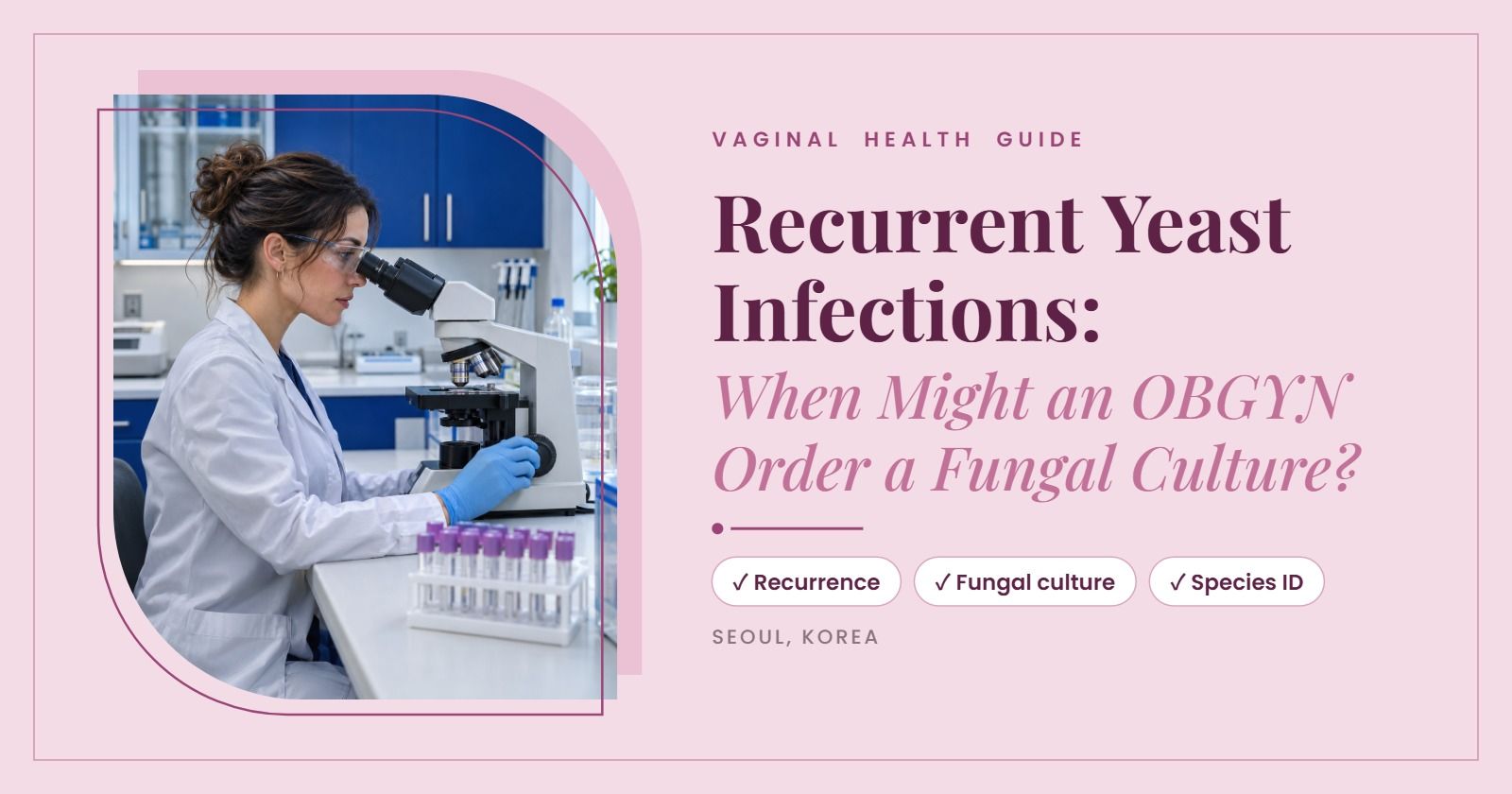
An OBGYN may order a fungal culture if you have four or more yeast infections a year, symptoms that return soon after treatment, or infections that do not respond to standard antifungals. The culture confirms that yeast is really the cause and identifies the Candida species. Some species, such as Candida glabrata , respond poorly to common treatments, so the result can change which medicine and how long a course you need.
What counts as recurrent yeast infection?
Recurrent vulvovaginal candidiasis is usually defined as four or more symptomatic episodes within 12 months. It is common, and it is not a sign of poor hygiene.
Frequent episodes
Four or more confirmed infections a year.
Quick return
Symptoms come back within weeks of finishing treatment.
Poor response
Itching and discharge continue despite standard antifungals.
Why might a fungal culture be ordered?
| Reason | What the culture adds |
|---|---|
| Confirm the diagnosis | Shows whether yeast is truly present, since BV, dermatitis or other conditions can mimic it |
| Identify the species | C. albicans vs. non-albicans species such as C. glabrata or C. krusei |
| Guide treatment | Non-albicans species may need a different medicine or longer course |
| Sensitivity testing | Sometimes performed to check resistance to specific antifungals |
Microscopy alone can miss yeast or fail to tell species apart, which is why culture is especially useful when symptoms keep coming back.
How is a fungal culture done?
- Stop treatment first Your doctor may ask you to avoid antifungals for a period before testing so results are accurate.
- Vaginal swab A swab is taken during a speculum exam, often at the same time as pH and microscope checks.
- Laboratory growth The sample is grown in the lab; results usually take several days to about a week.
- Results visit Your doctor explains the species found and adjusts your treatment plan.
How results can change your treatment
- Candida albicans: often an initial longer course followed by a maintenance plan for several months.
- Non-albicans species: may need a different antifungal or a longer course, chosen by your doctor.
- No yeast found: other causes such as contact dermatitis, BV or a skin condition are investigated.
Your doctor may also check for contributing factors such as diabetes, frequent antibiotic use or hormonal changes.
Preparing for your appointment
Bring or note
- Dates of past episodes and treatments used
- Whether symptoms improved with each treatment
- Other medications, including antibiotics and hormones
Avoid before testing
- Antifungal creams or pills (unless told otherwise)
- Douching and scented products
- Intercourse for 24–48 hours
Frequently asked questions
How many yeast infections a year is too many?
Four or more symptomatic episodes in 12 months is usually considered recurrent and is a good reason for further testing.
Does a culture hurt?
No more than a routine swab. It takes only a few seconds during a speculum exam.
How long do culture results take?
Usually several days to about a week, depending on the laboratory.
Can I keep using over-the-counter antifungals?
Repeated self-treatment can delay the right diagnosis. If infections keep returning, it is better to be examined and tested.
Should my partner be treated?
Partner treatment is not routinely recommended for yeast infections, though a partner with symptoms should see a doctor.
Key takeaways
- Four or more yeast infections a year is considered recurrent.
- A fungal culture confirms yeast and identifies the Candida species.
- Some species need different or longer treatment, so the result can change your plan.
- Avoid antifungals before testing unless your doctor advises otherwise.
This article is for general education and is not a substitute for a medical consultation. Symptoms, tests and treatments differ from person to person — please see a qualified gynecologist for diagnosis and care.